Orangutans & Wildlife
The animals of the jungle around Bukit Lawang
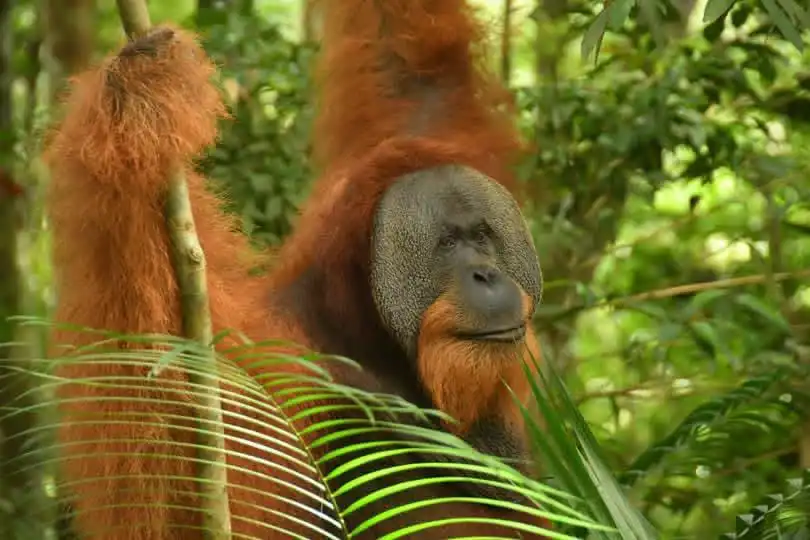
The jungle around Bukit Lawang is home to one of the rarest great apes in the world, the Sumatran orangutan, and to many other animals. Here you can learn a little about the animals you may meet on your trek, and how to behave so that they stay wild and healthy.
The Sumatran orangutan
The name comes from Malay and Indonesian: orang hutan means "person of the forest". Sumatran orangutans live only in the north of Sumatra, and Gunung Leuser National Park is one of their most important homes.
- Critically endangered: only around 12,000 to 15,000 Sumatran orangutans are estimated to live in the wild. Their biggest threat is the loss of their forest.
- Life in the trees: Sumatran orangutans spend almost their whole life high up in the canopy, where they find food and build a new sleeping nest every night.
- Mostly fruit eaters: they love ripe fruit, especially figs, and also eat leaves, bark and insects.
- Slow to grow up: a mother has a baby only about every 8 to 9 years, the longest gap of any great ape. The young stay with their mother for many years and learn everything from her.
- Big cheeks: adult males can develop wide cheek pads, which make their faces look very large.
Semi-wild and wild orangutans
From 1973, orangutans rescued from captivity were brought to a rehabilitation centre in Bukit Lawang and slowly released back into the forest. Some of the orangutans living around Bukit Lawang today came from this programme or are their descendants. They are called semi-wild, because they are more used to people than fully wild orangutans.
Wild orangutans are usually shy and keep their distance from humans. Semi-wild orangutans can come closer. They are still strong wild animals, so always follow your guide's instructions and keep your distance. Keep your food in your bag, so the animals are not tempted to come for it.
Other animals in the jungle
Besides orangutans, you may meet these monkeys on your trek:
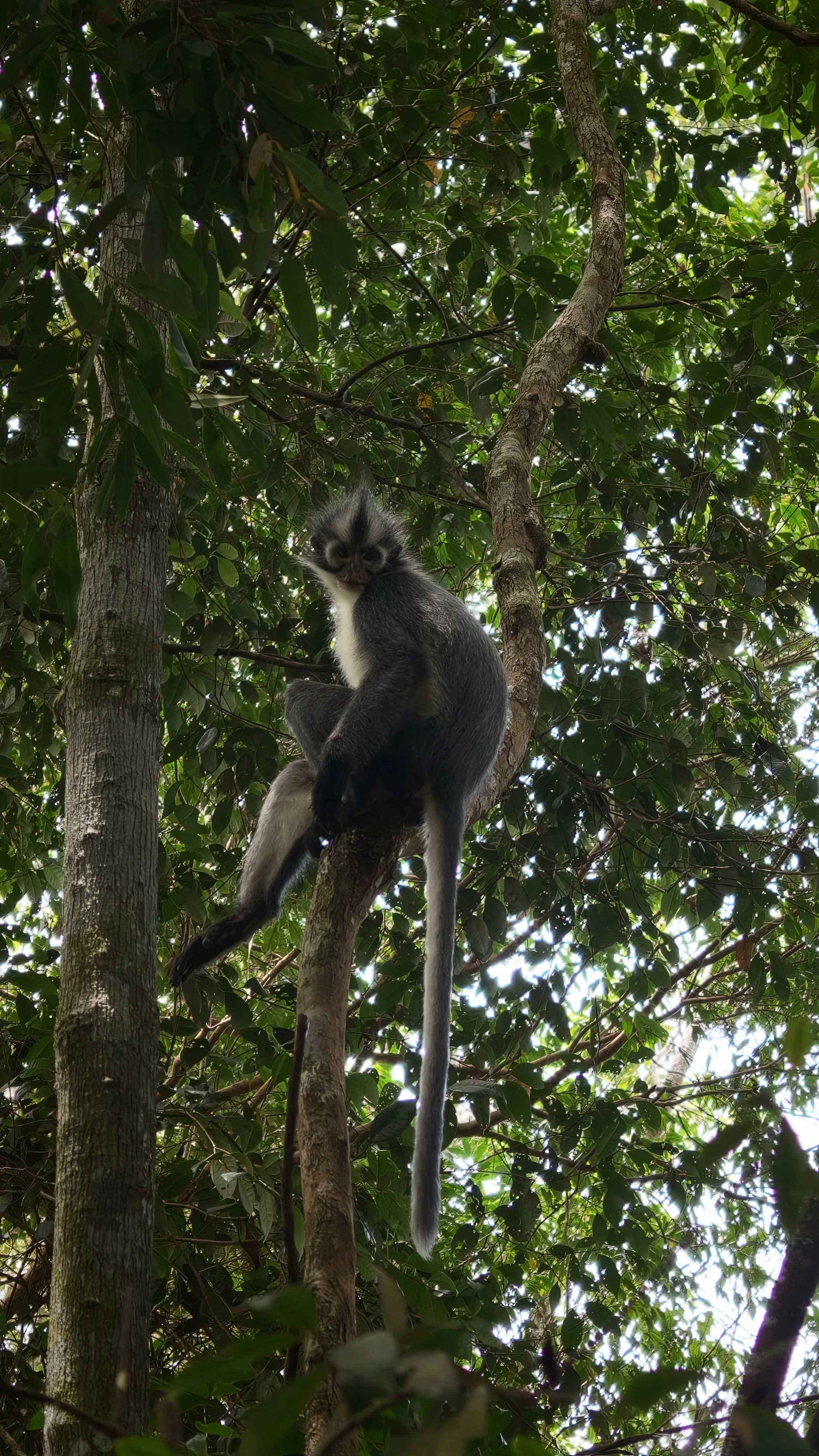
Thomas leaf monkey
Easy to recognize by its black and white crest of hair, which looks like a punk hairstyle. It lives only in the north of Sumatra and eats mostly leaves.
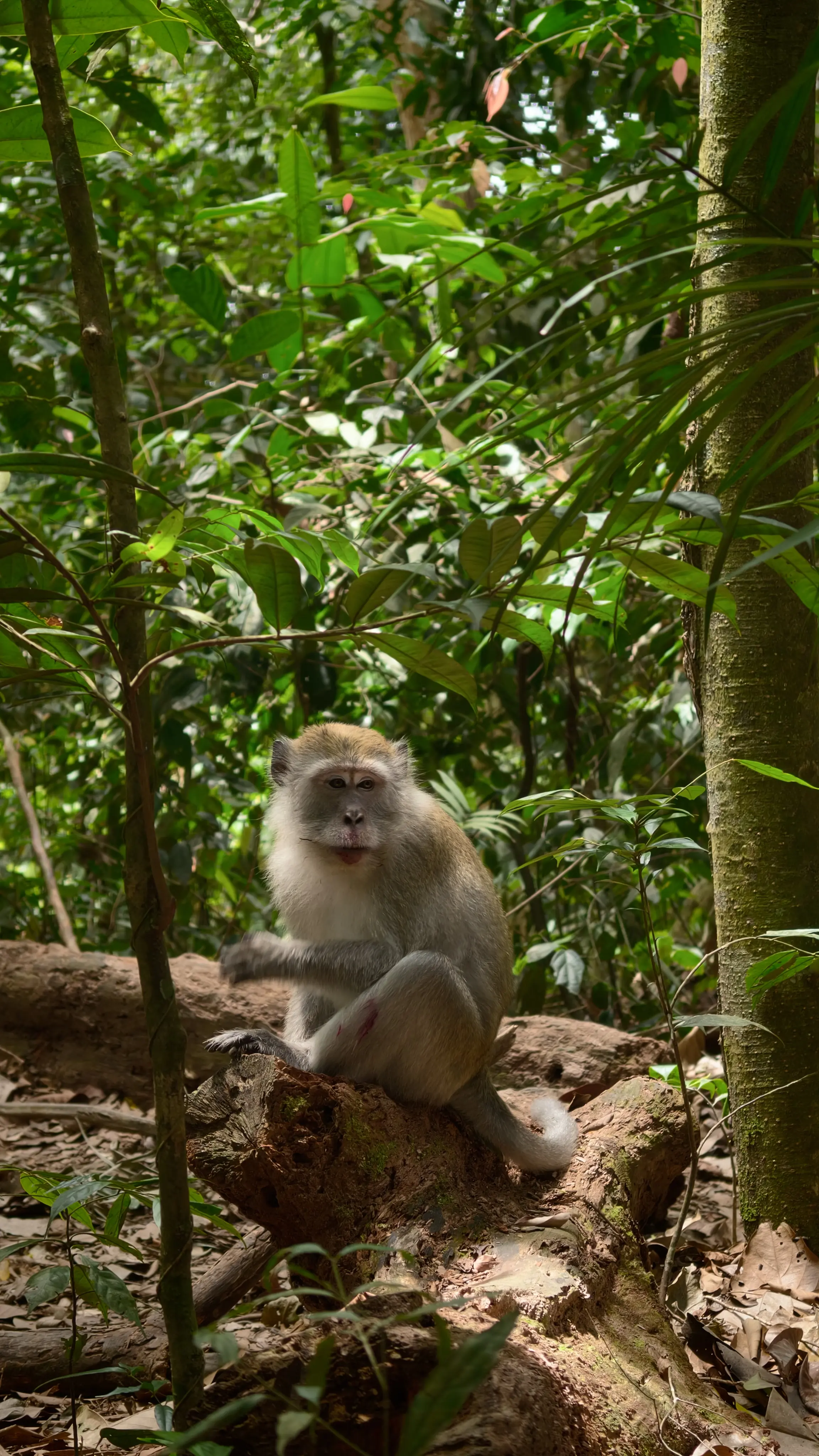
Long-tailed macaque
A grey-brown monkey with a very long tail. Long-tailed macaques live in groups, are curious and clever, and will happily grab food that isn't packed away.
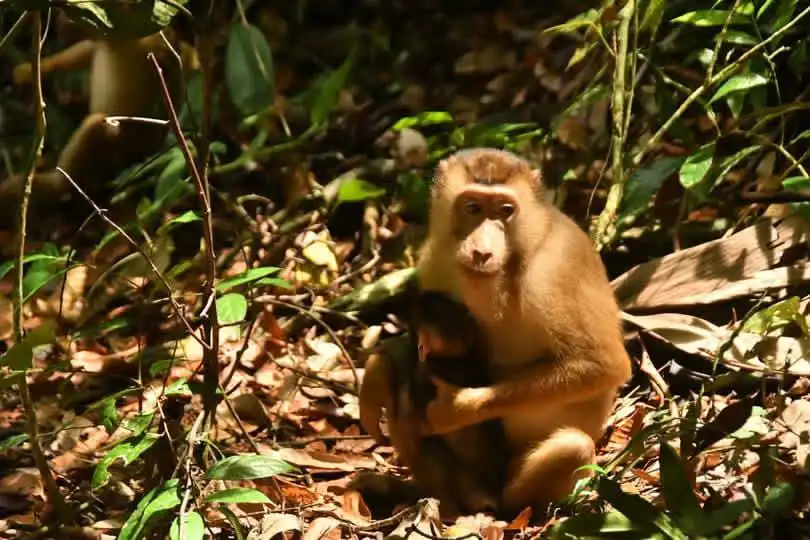
Pig-tailed macaque
A strong, brown macaque with a short, curly tail like a pig's. It spends a lot of time on the forest floor and lives in groups.
Wild animals, no guarantees
All animals in the jungle are wild and move freely. Nobody can promise which animals you will see on a trek, especially on shorter tours. That is exactly what makes every sighting special. Jos knows the forest well and does his best to show you as much of it as possible.
Please follow the rules in the jungle, such as keeping a distance of at least 10 meters and never feeding the animals. They protect the animals and you.